
01 · Build understanding
Teach.
Build understanding of consent, boundaries, power, exploitation and safe ways to intervene—so people can recognise risk before harm is normalised.
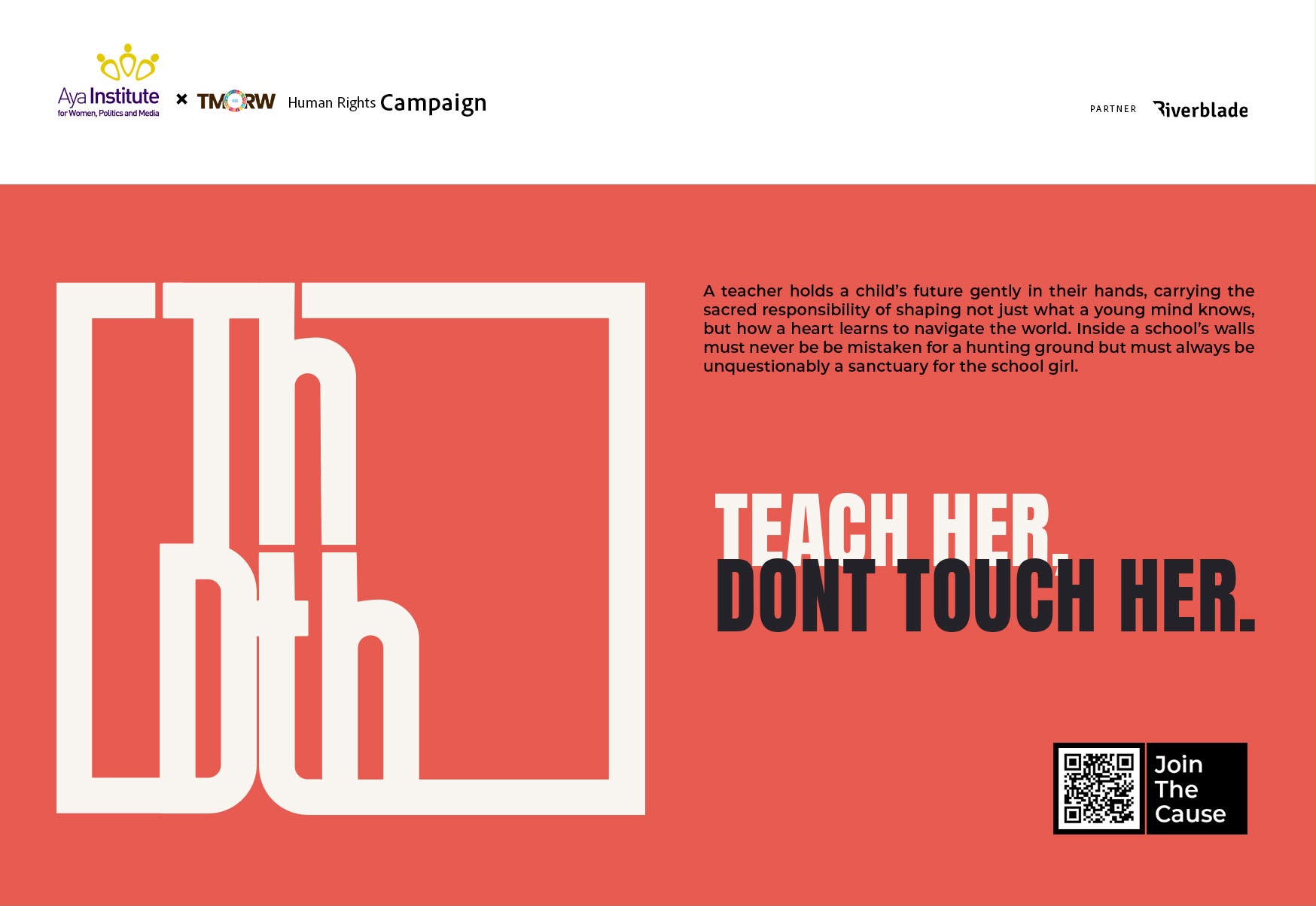
Teach Her, Don’t Touch Her
THDTH is a national public-education and accountability campaign, convened by Aya Institute for Women, Politics and Media, mobilising schools, training institutions, workplaces and communities across Ghana to prevent sexual harassment, exploitation and abuse—and to respond safely when harm is disclosed.
Education should expand a girl’s choices—not expose her to coercion, retaliation or silence.
A national campaign · Aya Institute for Women, Politics and MediaOur campaign framework
Teach. Protect. Believe. is not simply a slogan. It describes how THDTH moves from prevention, to institutional action, to a safer and more compassionate response when harm is disclosed.
01 · Build understanding
Build understanding of consent, boundaries, power, exploitation and safe ways to intervene—so people can recognise risk before harm is normalised.
02 · Put safety into practice
Turn knowledge into enforceable standards, safer environments, trusted reporting routes and accountable institutions that safeguard every child and young person.
03 · Respond with care
Receive disclosures without blame or dismissal. Take concerns seriously, prioritise immediate safety and connect the person with appropriate support while fair processes proceed.
Our focus and our promise
Teach Her, Don’t Touch Her speaks directly to the gendered barriers and abuses that can limit girls’ education and futures. That focus is deliberate, but it is not exclusion.
Boys can also experience sexual abuse, exploitation and coercion. Every child deserves prevention, protection, compassionate support and accountability. Our name leads with her; our safeguarding standard must hold for them all.
What we stand for
A strong safeguarding culture is not a poster on a wall. It is a living system: clear boundaries, informed communities, trusted reporting routes, careful responses and consequences that do not depend on status.
Put enforceable standards, safer recruitment and routine risk checks in place before a crisis.
Help students and staff understand boundaries, power, coercion and the right to say no without penalty.
Make disclosure routes confidential, accessible and centred on the safety and choices of the person harmed.
Investigate fairly, protect against retaliation and publish what institutions are doing to prevent repeat harm.
Require lawful criminal-record and controlled-register checks for everyone entrusted with children and young people, backed by safer recruitment and ongoing supervision.
For every role
Learn safe bystander actions, document concerns carefully and connect someone to support without taking control away from them.
Model professional boundaries, know the reporting protocol and never promise secrecy you cannot legally or safely keep.
Fund safeguarding, separate complaints from conflicts of interest and measure whether reporting routes are trusted in practice.
Carry the message into everyday spaces. Download campaign artwork for free, non-commercial workshops, banners, personal items and community publicity. Resale and profit-making use are prohibited without written permission; visit the merchandise page for official ordering and stockist information.
Believe her dignity. Protect her choices. Change the system that made harm possible.
The Get Help page lists official services and the source used to verify each number. If there is immediate danger, call Ghana’s national emergency line.